
Range
Anaesthesia
Anaesthesia workstations and ventilators for the operating theatre.
What is an anaesthesia workstation?
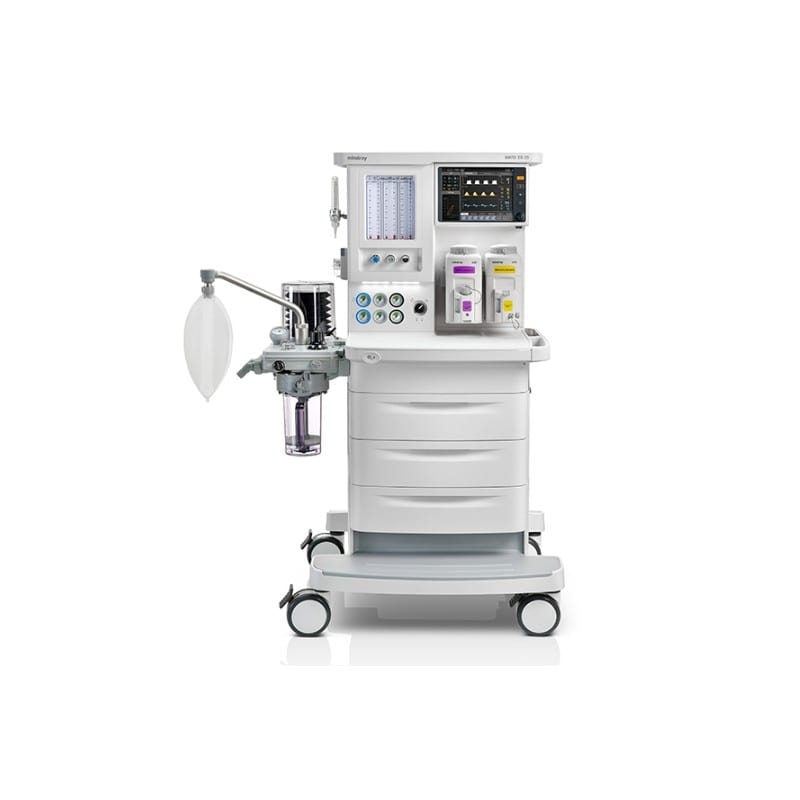
An anaesthesia workstation combines a ventilator, a vaporiser for halogenated agents, a patient circuit and gas monitoring. It must deliver a precise mixture throughout the procedure, whatever the patient's profile.
6 products
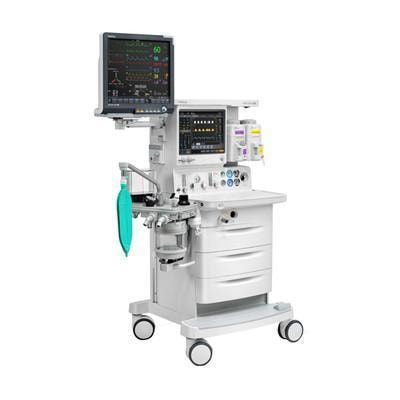
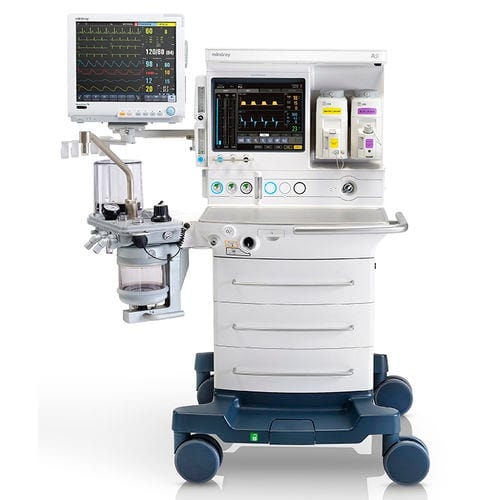
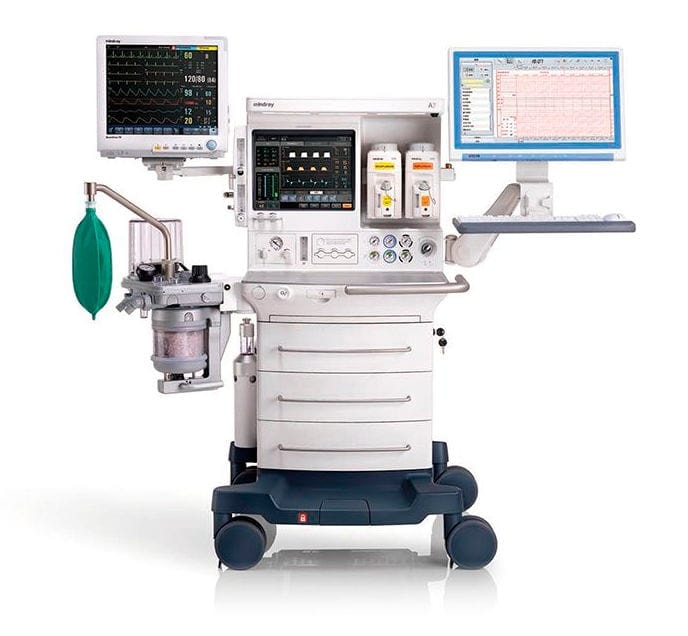
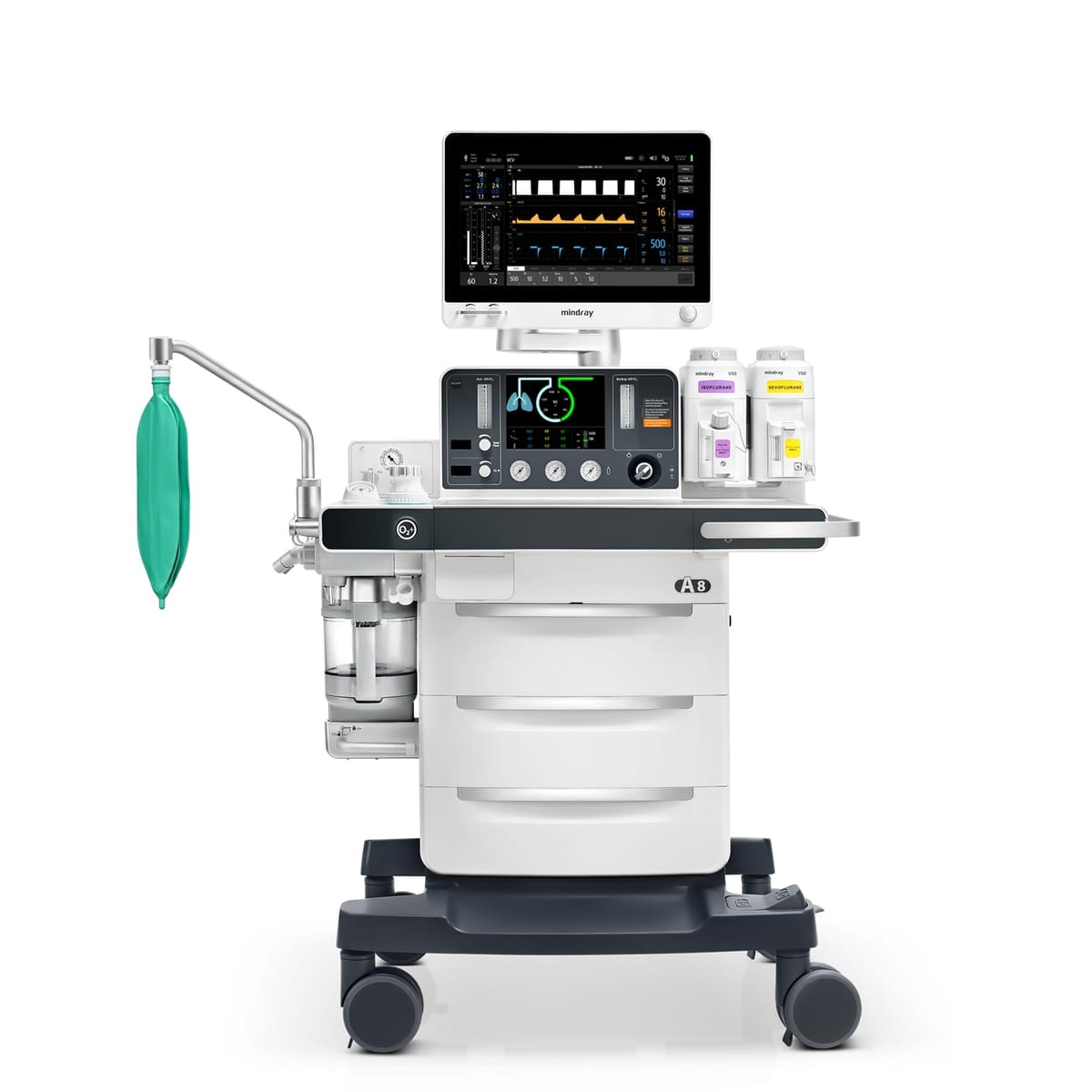
Compare specifications — Anaesthesia
WATO EX-35, WATO EX-65: values taken from the manufacturers' brochures, downloadable from each product page.
| Specification | WATO EX-35 | WATO EX-65 |
|---|---|---|
| Height | 1410 mm | 1 370 mm |
| Width | 945 mm (including breathing system) | 945 mm (including breathing system) |
| Depth | 690 mm | 690 mm |
| Weight | <145 kg | < 145 kg (without vaporiser or cylinder) |
| Monitored tidal volume | 0~2500 ml | 0 to 3 000 mL |
| Minute volume | 0 ~ 100 L/min | 0 to 100 L/min |
| Inspired oxygen (FiO2) | 18% ~ 100% | 18 to 100 % |
| I:E ratio | 8:1 ~ 1:10 | 50:1 to 1:50 |
| Rate | 0 ~120 bpm | 0 to 120 bpm |
| Positive end-expiratory pressure (PEEP) | OFF, 3~30 cmH2O | OFF, 3 to 30 cmH2O |
| Drive gas pressure | 280 kPa to 600 kPa | From 280 kPa to 600 kPa |
| Maximum gas flow | 120 L/min + fresh gas flow | 120 L/min + fresh gas flow |
Where is it used?
An anaesthesia workstation equips every room of an operating theatre, and choosing one commits the facility for ten to fifteen years. It is used by anaesthesiologists and nurse anaesthetists, in elective surgery as well as in emergencies. Compatibility with the patient circuits and consumables already in use at the facility should be checked before ordering: it determines operating costs as much as the purchase price. For a multi-room operating theatre, a uniform fleet simplifies staff training and maintenance, and limits handling errors from one room to the next.
What to check before choosing?
- Available ventilation modes: volume-guaranteed modes (PCV-VG, SIMV-VG) broaden the scope of use, particularly in paediatrics
- Gas analysis: automatic agent identification, measurement of FiO2, EtO2, CO2 and N2O
- Low flow: reduces anaesthetic agent consumption, and therefore operating costs
- Screen size and trolley ergonomics, which shape work in the operating room