
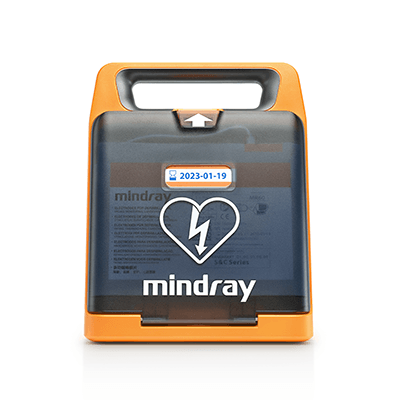
Range
Defibrillators
Manual and semi-automatic defibrillators, and AEDs.
What is a defibrillator?
A defibrillator delivers an electric shock to restore an effective heart rhythm. Hospital department models combine manual defibrillation, semi-automatic mode, external cardiac pacing and patient monitoring in a single portable device.
3 products
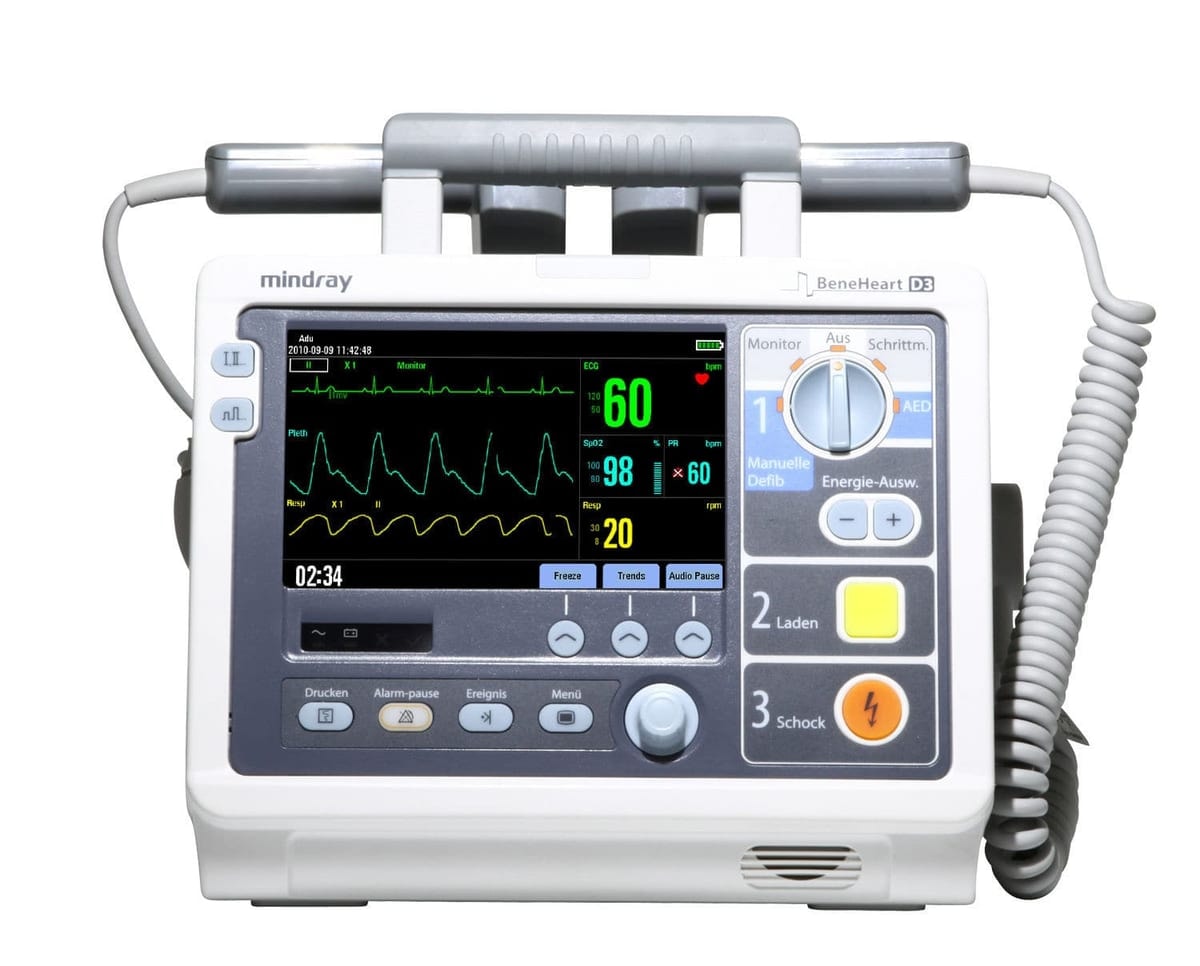
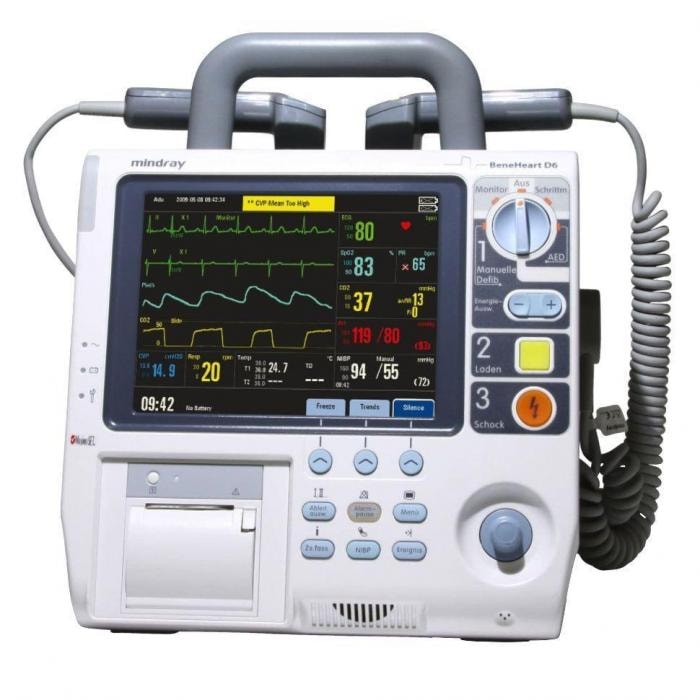
Compare specifications — Defibrillators
BeneHeart D3, BeneHeart D6: values taken from the manufacturers' brochures, downloadable from each product page.
| Specification | BeneHeart D3 | BeneHeart D6 |
|---|---|---|
| Weight | Main unit: 4.7 kg | Main unit: 6.6 kg |
| Battery weight | Battery pack (each): 0.5 kg | Battery (each): 0.75 kg |
| Screen size | 7 inches | 8.4 inches (21 cm) |
| Resolution | 800 × 480 pixels | 800×600 pixels |
| ECG leads | 3-lead ECG, 5-lead ECG, PADS/PADDLES | 3-lead ECG, 5-lead ECG, PADS/PADDLES |
| Heart rate — adult | Adult: 15 to 300 bpm | Adult: 15 to 300 bpm |
| Water resistance | IPX4 (without external power supply) | IPX4 (without external power supply) |
| Operating temperature | Operating: 0 to 45 °C | Operating: 0 to 45 °C |
Where is it used?
The defibrillator equips crash carts, intensive care units, operating theatres and ambulances. Its immediate availability takes priority over any other consideration: charged battery, electrodes within their expiry date, device checked. Hospital models combine manual defibrillation, semi-automatic mode and external pacing in a single device, which avoids multiplying equipment on the cart. Staff training and periodic checks matter as much as the choice of model: a defibrillator that has not been checked is equipment that is not available.
What to check before choosing?
- Available modes: manual, semi-automatic (AED), external pacemaker
- Parameters monitored during resuscitation: ECG, SpO2, capnography
- Battery autonomy and charge time between two shocks
- Weight and robustness, decisive for use in mobile interventions